
How I called the west-coast escalation early — and why there’s no brake on where it goes next
I’m not a paid analyst. I’ve just been watching this stuff long enough to spot when the map is being redrawn in front of us.
Last week I posted this on a news story:
“Trump has lately shown support for Saudi Arabia and a nuclear ambition for Saudis, Yemen is now a target and they have realised; the squeeze is on. Something will happen on the west coast of Yemen, possibly Saudi pushes for the coast.”
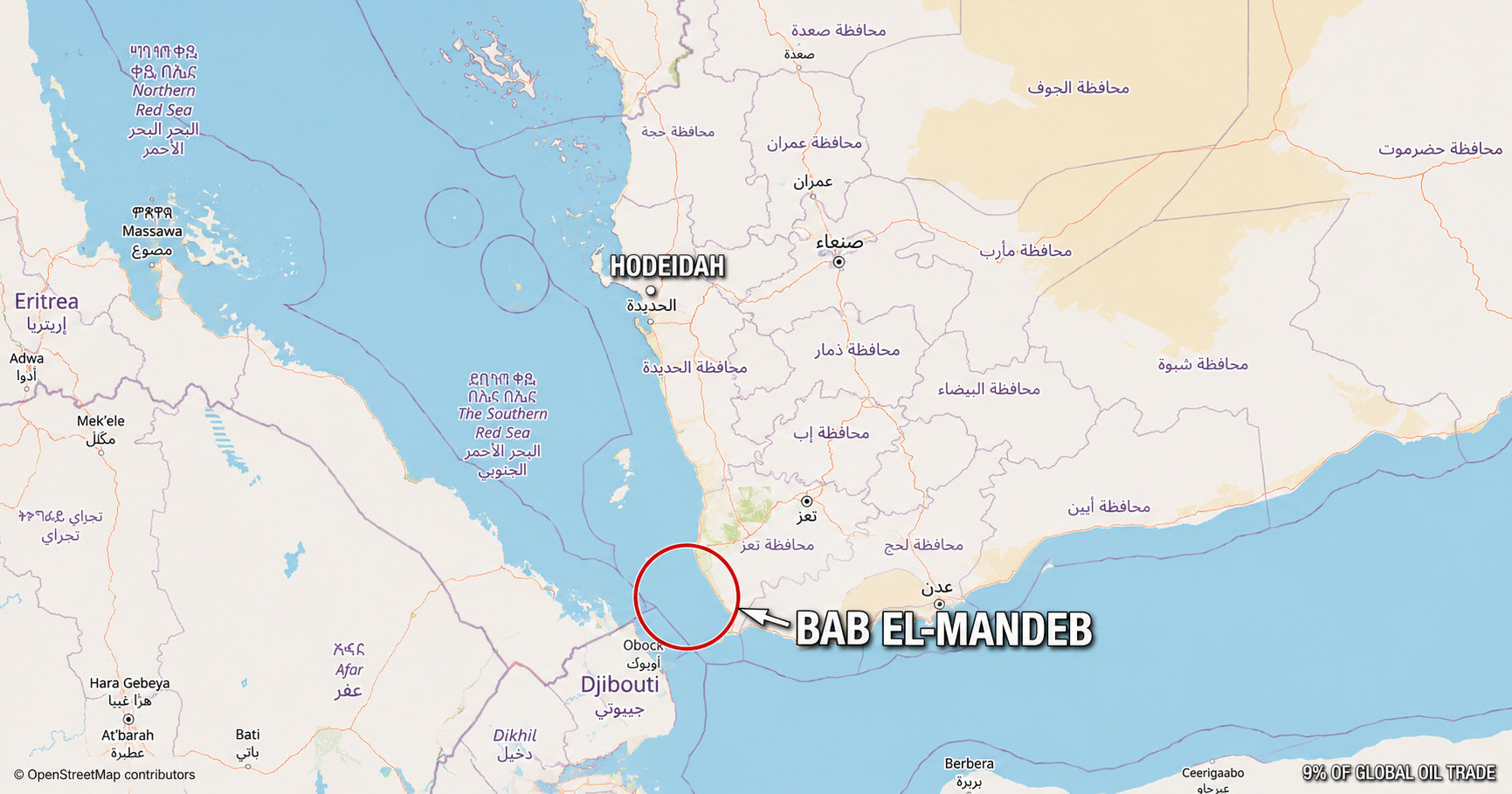
Since then: Saudi-led strikes on Hodeidah and Kamaran Island. Houthi missiles hitting Jizan and Yanbu — Saudi Arabia’s own Red Sea oil hub. Two Saudi tankers damaged in the Bab el-Mandeb. Shipping insurance rates going vertical. Reuters describing the region as “close to renewed war.”
I’m going to explain why I called it, and where I think this goes next.
Why I’m confident calling these
Back in April 2022, I remember reading a piece confidently pronouncing that the Azov defenders in Mariupol were finished. I wrote at the time: nope, they’ll prevail no matter what. They held out for weeks after that was declared impossible. They were eventually evacuated and later exchanged. Ukraine as a whole has sustained a war that most credentialled voices in early 2022 said couldn’t last three months. It’s now three years and change.
That’s not “I was right about one thing.” It’s a pattern of reading determination and geography and money flows, and not automatically deferring to whichever expert has the biggest byline. Sometimes the pub read is the sharper read. Not always. But often enough to trust it when the signals line up.
What I see in Yemen
Three currents converging on one geographic pressure point:
One. Iran is being squeezed on its home turf. Thirteen consecutive nights of American strikes. Its options are shrinking. Its remaining leverage is its proxy network — and the sharpest lever it has left is the Houthis, because they sit on top of nine per cent of global oil trade.
Two. Saudi Arabia is the country with the most to lose from Bab el-Mandeb closing. Their entire “Plan B if Iran shuts Hormuz” was the East-West pipeline to Yanbu on the Red Sea. If the Houthis can hit Yanbu — and they’ve now demonstrated they can — Saudi’s escape route from the Hormuz crisis just became part of the crisis.
Three. Trump has signalled to Riyadh that they’re inside the tent. Saudi civil nuclear cooperation, framed as normalisation with Israel, wraps up a package that reads to Riyadh as: we’ve got you. That confidence changes what Saudi is willing to risk.
The convergence point is the west coast of Yemen. That’s why I said what I said, days before the strikes escalated.
Where this goes next — and why the rules have changed
Here’s the piece most analysts are missing, because they’re pattern-matching to 2015-2020.
Last time round, Saudi had limits. US Congressional pressure — especially after Khashoggi in 2018. Biden froze offensive arms sales in 2021. International humanitarian scrutiny was constant. Weapons deals got scrutinised on the floor of the Senate. Every civilian casualty was a headline. Those constraints shaped what Saudi could do, how it fought, and eventually helped push it to the 2022 ceasefire.
Those constraints are gone.
Trump is not going to constrain Saudi. Congress will not constrain Saudi — the political attention is on Iran. Humanitarian scrutiny will be muted, because the news bandwidth is fully absorbed by Iran and Israel-Lebanon. Weapons transfers will accelerate, not slow. And the nuclear cooperation deal is a green light that reads, in Riyadh, as: whatever you need to do in Yemen, you have cover.
That means the ceiling on Saudi action is now much higher than most analysts are assuming. Their PREFERENCE is still coastal denial rather than full invasion — the cost, complexity, and Vision 2030 distraction all pull that way. But if the Houthis land a serious strike on Yanbu or hit a Saudi oil facility hard enough to move the export numbers, Riyadh now has the political room to escalate to whatever level it decides it needs.
With full US backing, anything is possible now. Ground campaign. Extended coastal occupation. Blockade of Hodeidah. Strikes further inland. Whatever Riyadh judges necessary. The international guardrails that limited the last war have quietly been removed while attention was on Iran.
That’s the analytical shift that matters. In 2015, “Saudi does a ground campaign in Yemen” was politically bounded. In 2026, it isn’t.
What Saudi will probably do first
They’ll still start with coastal denial, not coastal capture. Air and drone strikes to degrade Houthi missile launchers, radar, and communications. Saudi-backed Yemeni ground forces doing the messy work inland. Naval pressure to keep tankers moving. No Saudi flag going up over Hodeidah in the opening move.
Alongside this, watch southern Yemen. The UAE has been quietly consolidating Aden, Mukalla, and Socotra through the Southern Transitional Council for years. If Saudi ends up controlling the north-western coast, UAE ends up controlling the south. That’s a soft partition of coastal Yemen between two Gulf sponsors. Nobody will call it that. It’ll happen anyway.
Also watch:
- Russia. Every day this simmers is Kremlin windfall at $100 oil, going into Ukraine. Moscow has zero incentive to help calm this. Expect Russian tech reaching Houthis through Sudan back-channels.
- Egypt. Suez Canal Authority is haemorrhaging revenue. Cairo will start pushing harder — offering airbases, mediation, whatever gets ships moving again.
- The Trump wildcard. If US petrol prices hit $4.50/gallon for three weeks running, expect a bilateral Iran deal announced on Truth Social that undercuts everyone. His pattern is the personal deal, not strategic patience.
The real question
Not whether Yemen re-erupts — it has. Not whether the west coast becomes the flashpoint — it is. The real question is how far Saudi is willing to go now that nothing is holding them back.
I’ll be watching for three signals: PAC-3 batteries moving to Yanbu (Saudi conceding it’s genuinely at risk), Saudi-backed Yemeni forces mobilising westward (proxy campaign accelerating), and Egyptian Foreign Ministry activity (regional off-ramp being explored).
If any two of those show up together, we’re at the next escalation.
If Trump tweets an Iran deal before then, we’re not.
Either way, the map’s being redrawn. And this time round, there’s no external brake on how far it goes. That’s the thing nobody’s saying out loud.
I called it early because the signals were there for anyone willing to read them without the credential filter switched on.
Leave a Reply
You must be logged in to post a comment.